


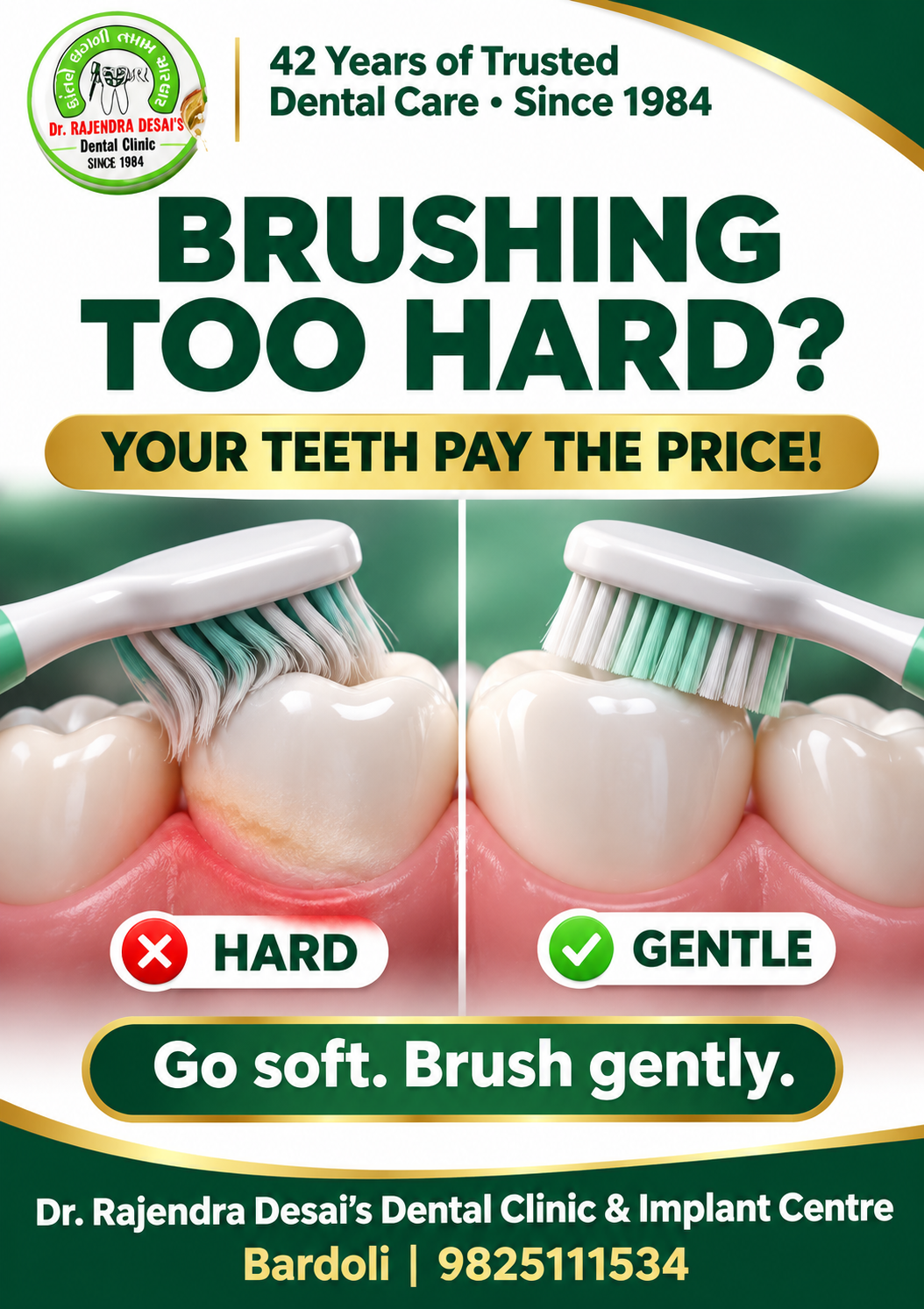
Brushing Too Hard? A Gentle Touch Can Protect Your Smile

Brushing Too Hard? A Gentle Touch Can Protect Your Smile
Your teeth need thorough cleaning—but extra force can do more harm than good.
Many people believe that pressing harder with a toothbrush removes more plaque or makes teeth whiter. In reality, effective brushing depends on your technique, a suitable toothbrush and consistent daily care.
How Can Hard Brushing Harm Your Teeth?
Repeated aggressive scrubbing, especially with stiff bristles or abrasive toothpaste, can contribute to tooth wear and irritate your gums.
Over time, you may notice:
Sensitivity: Discomfort when drinking something hot or cold.
Wear near the gumline: Grooves or worn areas where the tooth meets the gum.
Gum irritation: Tenderness or soreness after brushing.
Gum recession: Exposed root surfaces as the gum margin moves away from the crown.
These problems can have several causes, so a dental examination is important before assuming that brushing is responsible.
Signs You May Be Using Too Much Pressure
Do your toothbrush bristles spread out quickly? Do you scrub back and forth forcefully? Do your gums feel sore after brushing?
These may be clues that you need a gentler approach. Regular bleeding also deserves a dental check-up because it can indicate gum disease.
How to Brush Gently and Effectively
1. Choose soft bristles
Use a soft-bristled toothbrush with a head that comfortably reaches all areas of your mouth.
2. Use light pressure
Guide the brush across your teeth. Avoid pressing hard enough to flatten or widely bend the bristles.
3. Make small, gentle movements
Position the bristles towards the gumline at approximately 45 degrees and use short, controlled strokes. Clean the outer, inner and chewing surfaces.
4. Brush for two minutes, twice daily
Give each area attention, including your back teeth. Make brushing before bed part of your routine.
5. Use fluoride toothpaste
Fluoride helps protect against tooth decay. Extra scrubbing is not a substitute for the right toothpaste and technique.
6. Replace a worn toothbrush
Change your brush every three to four months, or sooner if the bristles become frayed. A powered toothbrush with a pressure sensor may help if you struggle to judge your brushing force.
Already Experiencing Sensitivity?
Avoid scrubbing harder to “clean away” the problem. Arrange a dental examination to identify the cause and receive advice suited to your teeth and gums.
A healthy smile begins with gentle, consistent care.
At Dr. Rajendra Desai’s Dental Clinic & Implant Centre, we can assess your brushing technique and help you build a suitable home-care routine.
42 Years of Trusted Dental Care • Since 1984
📍 Bardoli
📞 9825111534


Comments